A Small, Historic Pocket Next to Olde Towne
Emanuel is one of the smallest, least-talked-about pockets in Portsmouth, and that's exactly why the buyers who find it tend to love it. It sits just west of the Olde Towne historic core along North Street, close enough to walk to the waterfront and the Commodore Theatre, but quiet enough that it doesn't feel like the middle of downtown.
The name comes from Emanuel African Methodist Episcopal Church, a congregation founded in 1772 and one of the oldest African-American churches in the region, whose current building on North Street dates to 1857 and is a documented stop on the Underground Railroad [1](https://oldetowneportsmouth.com/listings/emanuel-african-methodist-episcopal-church/). The blocks around the church were formally added to the Portsmouth Olde Towne Historic District in 1983 as a residential extension, which tells you a lot about the age and character of the homes here [2](https://www.dhr.virginia.gov/historic-registers/124-0034/).
If you're comparing this pocket to Truxtun or Park View, Emanuel is smaller and more residential, without the retail strip you get in the heart of Olde Towne. For the wider picture of the city, start with my Portsmouth overview.
I like giving buyers this history before we tour, because it explains what you'll see on the ground: a compact grid of older homes built around a landmark church, rather than a subdivision built to a single plan. Buyers who value a real sense of place, not just square footage, tend to be the ones who end up making offers here.
Emanuel's small footprint also means the buyer pool is limited, which can work in your favor if you're patient and ready to move when the right home comes up, since it doesn't attract the same crowds as larger, better-known Portsmouth neighborhoods.
The Olde Towne Historic District extension that covers this pocket also includes a second stretch of blocks between London Boulevard and Queen Street, home to the Gothic Revival-style Monumental Methodist Church and Romanesque Revival Court Street Baptist Church, giving the surrounding area an unusually dense concentration of historic architecture for such a small footprint [2](https://dhr.vi-vn.virginia.gov/wp-content/uploads/2018/04/124-0034_Portsmouth_Olde_Towne_HD_extension_1983_Final_Nomination.pdf).
The Houses: Turn-of-the-Century and Early-1900s Character
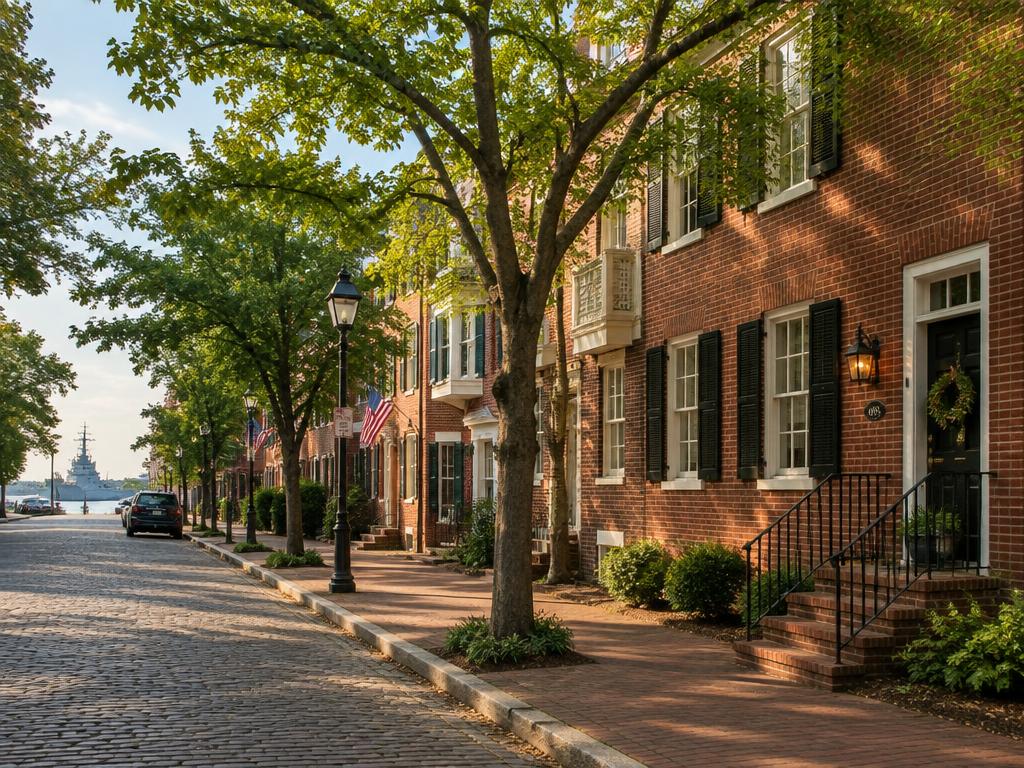
This is old-house territory. The residential extension around North Street was documented as containing vernacular dwellings dating to the turn of the 20th century, standing on narrow, close-set lots typical of Portsmouth's original street grid [2](https://www.dhr.virginia.gov/historic-registers/124-0034/). You'll see modest frame cottages and small Victorian and foursquare-style homes mixed together, many built long before central air, attached garages or open floor plans were the norm.
Because these are older, individually built homes rather than a single subdivision, condition varies block to block and even house to house. Some have been carefully updated with modern systems behind a historic facade; others have sat with original wiring, plumbing and roofing for decades. I always want a full home inspection here, and I'll walk you through what to expect from an older Portsmouth rowhouse or cottage before you write an offer.
If historic district guidelines apply to a specific property, exterior changes may need approval, so ask early if you're planning to renovate the outside.
Lot sizes here are generally small and yards modest, a reflection of how the neighborhood was originally platted for walkable, close-in living rather than sprawling suburban lots. If a big backyard is a must-have for you, this may not be the right pocket; if you'd rather trade yard space for character and location, it's worth a serious look.
I also tell buyers to budget for the unglamorous parts of owning an older home: periodic roof and system replacements, occasional foundation maintenance, and the reality that a 100-year-old house will always need more attention than a home built in the last decade.
Architecturally, expect a mix of detached single-family cottages and double houses, nearly split evenly between the two, along with a handful of late 19th-century apartment buildings scattered through the surrounding blocks, all sharing the same narrow-lot, grid-pattern layout typical of historic Portsmouth [1](https://dhr.vi-vn.virginia.gov/wp-content/uploads/2018/04/124-0034_Portsmouth_Olde_Towne_HD_extension_1983_Final_Nomination.pdf). Streets carry granite curbs, and some sidewalks still have their original brick paving, small details that add to the neighborhood's historic feel but also mean utility work or driveway changes may need extra coordination with the city.
Streets, Scale and Everyday Feel
North Street is the spine of this pocket, running from the edge of the Olde Towne core out toward Green Street and the surrounding blocks. The scale is small: narrow lots, short blocks, sidewalks and homes set close to the street, which makes for an easy walk but also means less privacy and smaller yards than you'd find in a newer Portsmouth subdivision.
It's a quiet, mostly residential stretch. You won't find much retail directly in Emanuel itself, but you're an easy walk or a very short drive to the shops, restaurants and waterfront of Olde Towne, including High Street's dining scene and the Tidewater Yacht Marina area.
Because the area is so compact, I encourage buyers to walk the actual blocks, not just drive them, before deciding. You'll notice differences from one street to the next in how well homes have been maintained, how much street parking is available and how much traffic passes through at different times of day.
Street parking is common on the narrower blocks, so if off-street parking matters to you, ask specifically whether a home has a driveway or dedicated pad before you tour, since not every lot here was built with a car in mind.
Getting Around: Downtown, the Tunnels and the Bases
Because this pocket sits right on the edge of downtown Portsmouth, you're close to the Downtown Tunnel and Midtown Tunnel connections into Norfolk, which makes for a short commute to downtown Norfolk offices, Norfolk Naval Shipyard and Naval Station Norfolk depending on your route and time of day.
The Elizabeth River ferry, which runs between Olde Towne Portsmouth and downtown Norfolk, is also within walking distance for residents who want an alternative to tunnel traffic during peak commute hours. If you're relocating for a base assignment or a shipyard job, I'd encourage you to drive the actual route at rush hour before you commit; my relocating and PCS/military pages cover how I help buyers moving in from out of town.
For buyers weighing several close-in Portsmouth pockets against each other, it's worth comparing this commute to what you'd get from Truxtun or Park View; all three sit within a few minutes of each other and of the tunnels, but traffic patterns and parking can differ block by block.
If you commute by car most days, factor in that downtown Portsmouth streets can be tighter and slower than suburban arterials, and that on-street parking is more common than dedicated driveways on some blocks.
Flood Zones and Insurance
Emanuel sits close to the Elizabeth River and within Portsmouth's older, low-lying downtown fabric, so flood risk is something to check on every property here, not assume one way or the other. Some streets and lower blocks may fall within FEMA-mapped flood zones while others sit on slightly higher ground just a few blocks away.
I pull the FEMA flood map for the specific address before we write an offer, and I ask sellers directly about past water intrusion or flood insurance claims. If a lender requires flood insurance on a home you're financing, that changes your real monthly payment, so run the numbers in my mortgage calculator before you fall in love with a house.
During the inspection, I want an inspector to pay close attention to crawl spaces, foundations, grading and gutters. Older homes here were often built before modern drainage and stormwater standards, so this is one of the first things worth evaluating carefully, not something to skip because a house looks charming on the outside.
Homeowners insurance quotes can also vary more than usual here depending on a home's age, roof and proximity to the river, so I encourage buyers to get insurance quotes early in the process rather than waiting until just before closing.
It's also worth asking whether a specific home has flood insurance currently in place and, if so, what the annual premium runs, since that figure carries forward to you as the buyer and is a useful real-world data point beyond the FEMA map alone.
HOAs and Historic District Rules
There isn't a large, amenity-driven HOA here the way you might find in a newer suburban Portsmouth neighborhood. What matters more in Emanuel is whether a given property falls within the boundaries of the Portsmouth Olde Towne Historic District, which can bring design review for exterior changes. I'll confirm this for any specific address before you make renovation plans.
If a home you're considering is within the historic district, plan on some extra steps and possibly extra cost for exterior work like windows, siding or roofing materials, since approved materials sometimes cost more than standard options. It's worth budgeting for that up front rather than being surprised later.
I always check the historic district boundary against the specific parcel, not just the block, since district lines can shift by a lot or two, and getting this wrong can mean an unwelcome surprise the first time you apply for a renovation permit.
Schools
Portsmouth Public Schools zones by home address, and this pocket near North Street falls under the district's downtown-area elementary, middle and high school assignments. I've put together a full breakdown, including how to confirm your specific zoning, in my Emanuel schools guide.
Financing an Older Home Here
Older homes can complicate financing if there's deferred maintenance, so it helps to know your loan options going in. Many buyers here use VA loans given the proximity to the shipyard and naval bases, while others look at FHA financing or a standard conventional loan. Whichever route you take, get pre-approved before we tour so we can move fast when the right house comes up.
Keep in mind that some loan programs have their own property condition requirements, which can matter more in a neighborhood of older homes. I'll help you understand up front whether a specific house is likely to sail through an appraisal and underwriting, or whether repairs will need to happen first.
Renovation loan products, including FHA 203(k) financing, can also be worth exploring if you find a home here with real potential but obvious deferred maintenance, since they let you roll estimated repair costs into your purchase financing rather than paying out of pocket right after closing.
Writing a Competitive Offer
Because inventory in a small pocket like Emanuel is limited, well-priced, well-maintained homes here don't sit long. I'll help you understand what condition and updates a specific asking price reflects before you offer, and I'll flag anything an inspection is likely to surface so you're not blindsided mid-contract.
If you're a first-time buyer, my home buyer checklist is a good starting point, and my first-time buyer page walks through the whole process from pre-approval to closing.
I also encourage buyers here to think through their renovation timeline before writing an offer. If a home needs work, knowing roughly what that work will cost, and in what order to tackle it, will shape how much you're comfortable offering and what contingencies make sense to include.
Because this pocket is tucked next to a well-known historic district, buyers sometimes assume prices will be higher than they actually are; a quick comparison with recent Olde Towne sales usually shows Emanuel remains one of the more accessible entry points into this part of the city.
Whatever your timeline, I'll walk the property with you before we write anything, point out what I'd expect an inspector to flag, and help you decide whether this specific house, on this specific block, is the right fit for what you're trying to build here.