Why Buyers Fall for Cradock
Cradock is one of the most distinctive neighborhoods I show buyers in Portsmouth, and it isn't subtle about it. The moment you turn off George Washington Highway or Victory Boulevard onto one of its residential streets, you notice the layout is different from anywhere else in the city: curving blocks, a town square with a bandstand, and cottage-style homes that were designed to feel like a real community rather than a subdivision.
That's because Cradock was built as one. The U.S. Housing Corporation laid it out in 1918 to house the wave of workers pouring into Norfolk Naval Shipyard during World War I, and the architects were told to avoid monotony street by street, which is exactly why no two blocks look quite alike here [2](https://www.dhr.virginia.gov/historic-registers/124-0037/).
Buyers who tour Cradock tend to be looking for the same thing: walkability, front porches, mature trees, and a shorter commute to the shipyard and downtown than they'd get in Portsmouth's newer neighborhoods. Compared with the postwar ranch streets of Douglas Park or the small historic pocket around Emanuel, Cradock offers a more consistent, planned-community feel with its own commercial strip and civic identity.
This guide covers Cradock's history, its housing stock, the commute, flood considerations, HOA and historic-district rules, schools, financing and how to put together a competitive offer. For the bigger picture on the city, see my Portsmouth overview.
A Planned Community Built Around Afton Park
Cradock's layout follows the rough shape of an anchor, with Afton Park as the town square at its center, complete with a bandstand that's still a neighborhood gathering point today [2](https://www.dhr.virginia.gov/historic-registers/124-0037/). The design was intentional: architect George B. Post and Sons planned schools, churches, recreational land and a commercial district right alongside roughly 750 single-family cottages, so residents wouldn't need to leave the neighborhood for daily life [2](https://www.dhr.virginia.gov/historic-registers/124-0037/).
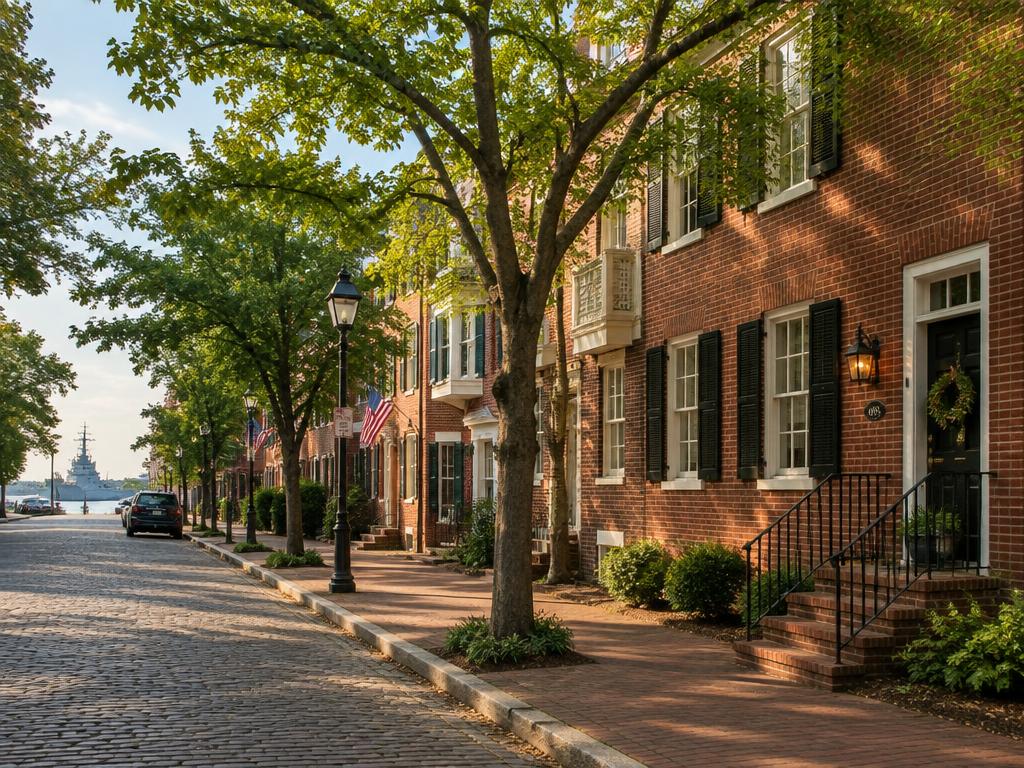
That planning shows up in how Cradock feels to walk through. Streets curve and terminate at green space instead of running in a strict grid, sidewalks are everywhere, and the scale of the homes is consistent even as the individual styles vary. Buyers who've toured a lot of Hampton Roads neighborhoods often tell me Cradock is the one that feels the most like an actual town rather than a collection of houses.
The whole district, roughly 310 acres, was listed on the National Register of Historic Places in 1974, and it remains a working-class neighborhood with strong community pride that has kept its identity intact for more than a century [2](https://www.dhr.virginia.gov/historic-registers/124-0037/).
The blocks immediately around Afton Park and Prospect Way are considered the architectural heart of Cradock, with some of the district's most intact and photogenic cottages [3](https://en.wikipedia.org/wiki/Cradock_Historic_District). If you want the full historic-neighborhood experience, front porch, bandstand views, walk to the corner store, this is the pocket to focus your search.
Streets farther from the square still carry the same cottage character but tend to trade a little bit of walkability for slightly larger lots or quieter traffic. I encourage buyers to walk more than one section of Cradock before deciding, since the feel can shift block to block even within a single planned district.
Cradock also still has a small commercial strip near its center, a legacy of the original design that intended for residents to be able to walk to shops, which is unusual for a neighborhood this age in Portsmouth.
Cottage Styles, Bungalows and What to Expect Inside
Homes in Cradock were built primarily in Colonial Revival and bungalow/craftsman styles, and the district includes 759 contributing buildings, almost all single-family residences from the 1918 to early-1920s building campaign [3](https://en.wikipedia.org/wiki/Cradock_Historic_District).
Expect the classic markers of a shipyard-era cottage: front porches deep enough to sit on, gabled or hipped roofs, modest square footage, and lots that are narrower than what you'd find in newer Portsmouth subdivisions. Interiors often still have original hardwood floors, plaster walls, and layouts built around a front living room rather than an open-concept great room.
Because these homes are now well over a century old, expect original systems to have been updated at some point, or to need updating. I always want to know the age of the roof, whether the electrical panel has been modernized, and whether plumbing has been replaced, before we get too attached to a house's curb appeal.
Renovated homes here can move quickly, and buyers looking for character with fewer surprises should budget extra time to find one that's already had the major systems addressed.
Lot sizes throughout Cradock run smaller than in Portsmouth's mid-century suburbs, which keeps yard work manageable but also means garages and off-street parking are less common than buyers moving from newer neighborhoods might expect. Detached one-car garages, when they exist, are often original outbuildings tucked at the rear of the lot.
Commutes: The Shipyard, Downtown Portsmouth and the Tunnels
Cradock sits close to George Washington Highway and Victory Boulevard, both of which get you onto I-264 quickly for trips into downtown Portsmouth, the Downtown Tunnel to Norfolk, or west toward Chesapeake [3](https://www.aaroads.com/guides/i-264-east-portsmouth-va).
For shipyard families, this is one of Cradock's biggest selling points. Norfolk Naval Shipyard sits just across Paradise Creek from the neighborhood, and many residents chose Cradock specifically because it shortened their drive to the yard to a matter of minutes rather than fighting tunnel traffic every day.
If you're relocating for military orders or shipyard work, I always recommend driving your actual commute at the time you'll be making it, since tunnel backups on I-264 and I-664 can vary a lot by shift. My relocating page and PCS/military page cover how I help buyers moving from out of the area.
Portsmouth's light rail and bus network also touch the edges of Cradock, giving car-free commuters another option into downtown Portsmouth and, via transfer, Norfolk. For buyers weighing Cradock against other Portsmouth neighborhoods with a similar shipyard-friendly commute, my Park View guide covers a nearby alternative with its own character.
Flood Zones and Paradise Creek
Cradock's historic district is bounded in part by Paradise Creek, and Portsmouth as a whole is highly susceptible to coastal flooding because of its position along the Elizabeth and James Rivers, a risk the city has documented since major storms going back to 1933 [3](https://portsmouthva.gov/DocumentCenter/View/1912/Flood-Pamphlet-PDF).
Some streets near the creek and lower-lying parts of the neighborhood fall within FEMA Special Flood Hazard Areas, while blocks on higher ground may not. I never assume either way, I pull the FEMA flood map for the specific address and ask sellers directly about past water intrusion or insurance claims before we write an offer.
If a home is mapped in a flood zone and you're financing, your lender will require flood insurance, which changes your real monthly payment. Run the numbers through my mortgage calculator so there are no surprises at closing.
Historic District Rules and What They Mean for Renovations
Because Cradock is a nationally recognized historic district, exterior changes, additions, and some renovations may be subject to review under Portsmouth's historic district guidelines [4](https://www.portsmouthva.gov/historic-districts). This doesn't mean you can't update a Cradock cottage, but it does mean you should check with the city before planning exterior work like replacement windows, siding, or additions.
There isn't a private homeowners association running Cradock day to day, but the strong sense of community pride here functions like one in practice: residents care about how the neighborhood looks and are active in maintaining its character.
If your renovation plans are extensive, factor the historic review timeline into your purchase decision, and ask your inspector to flag anything that would trigger it before you're under contract.
I also tell buyers to budget time, not just money, for historic review. Even straightforward projects like a replacement roof or new windows can take longer to approve than they would in a neighborhood without historic-district status, so factor that into any renovation timeline before you close.
Schools Serving Cradock
Cradock is served by Portsmouth Public Schools, with Cradock Elementary and Cradock Middle School both located within the neighborhood, and Manor High School serving the area at the high school level [3](https://cres.ppsk12.us/) [1](https://www.13newsnow.com/article/news/local/mycity/portsmouth/portsmouth-school-board-expected-to-vote-on-new-names-for-schools/291-fa3779c4-a93c-4142-af6c-4e41720f4f9f).
I've put together a full breakdown of grade spans, boundaries and how to confirm zoning by address in my schools guide for Cradock. Always verify the zoned schools for a specific address with the school division before you write an offer, since boundaries can shift.
Financing an Older Home in a Historic District
Financing a century-old cottage isn't fundamentally different from financing any other home, but appraisers and lenders will look closely at condition, especially roofing, foundation and electrical systems. VA loans are common here given the shipyard and military presence in Portsmouth; my VA loans guide covers what that process looks like.
First-time buyers drawn to Cradock's lower price points relative to newer construction should also look at FHA financing, while move-up buyers with stronger down payments often do better with a conventional loan. My home buyer checklist is a good place to start regardless of loan type.
Because older homes can trigger extra scrutiny on inspections and appraisals, get pre-approved early and let your lender know upfront that you're looking at a pre-1930s historic district home.
Writing a Competitive Offer in Cradock
Well-maintained, updated cottages near Afton Park tend to draw the most interest, so if you find one in good condition, be ready to move quickly with a strong, clean offer. Homes that need more work sit on the market a bit longer and give buyers more room to negotiate repairs or price.
I always recommend a full home inspection here given the age of the housing stock, and I like to have a frank conversation with sellers about the roof, electrical panel, plumbing and any past water issues before we finalize price. If you're new to the area or coming from out of state on orders, my first-time buyers page and relocating page walk through how I structure offers to protect you without losing the house.
Whatever your situation, I'll help you weigh Cradock's character and commute against the realities of owning an older home, so you go into your offer with clear eyes and a strategy that fits the actual property, not just the neighborhood's reputation.
Recreation, the Library and Life Along the Elizabeth River
Cradock's original planners built recreation into the neighborhood from day one, and that legacy is still visible. The Cradock Recreation Center anchors youth sports and community programming a short walk from most of the neighborhood's homes, and the Cradock Branch Library on Prospect Parkway gives residents a walkable public library rather than a drive across town.
Just south of the neighborhood, Elizabeth Manor Golf & Country Club sits along the Elizabeth River, offering golf, tennis and a clubhouse for residents who want recreation nearby without leaving the immediate area. Between the park at Afton Square, the recreation center and the golf club, Cradock has more built-in amenities within a short walk or drive than most Portsmouth neighborhoods of its size.
This density of civic and recreational space is part of why longtime residents describe Cradock as feeling more self-contained than a typical subdivision, and it's a detail I point out to buyers who value walkable amenities as much as the house itself.
Comparing Cradock to Nearby Portsmouth Neighborhoods
Buyers touring Cradock are often cross-shopping other close-in Portsmouth neighborhoods, and it helps to know how they differ. Douglas Park's ranch-style streets, a short drive away, tend to offer larger lots and simpler renovation rules since it sits outside a historic district, which appeals to buyers who want space to add on without historic review.
Closer to the water, the small historic pocket around Emanuel shares some of Cradock's early-20th-century character on a much smaller scale, while Churchland offers a mix of eras farther from the shipyard with an easier commute toward the James River Bridge and Suffolk. I walk buyers through these trade-offs, walkability versus lot size, historic charm versus renovation flexibility, commute versus price, so the neighborhood choice matches how you actually want to live, not just which one photographs best.
None of these are better or worse than Cradock outright; they simply serve different priorities, and having toured all of them helps me point you toward the one that fits.