Why Buyers Look at Truxtun
Truxtun is one of the few Portsmouth neighborhoods where the history of the house is part of what you're buying. This isn't a subdivision that popped up in a single building boom decades ago and then sat frozen in time. It was designed as a complete community in 1918, and walking the streets today you can still feel that original plan in the spacing of the houses, the varied rooflines and the mature street trees that have had a century to grow in.
Buyers who choose Truxtun tend to want something with real story behind it, at a price point that's still more approachable than the close-in Norfolk neighborhoods it often gets compared to. Compared to the newer housing stock in Cradock or the Victorian-era blocks of Prentis Park, Truxtun offers its own distinct architectural identity and a strong, engaged civic league that keeps the neighborhood's history visible and celebrated.
This guide covers the neighborhood's history, its housing stock, the historic-district rules you'll need to know, everyday life, commutes to the shipyard and downtown, flood considerations, financing and how to put together a competitive offer. For the bigger picture on the city, see my Portsmouth overview.
I find that buyers who take the time to understand what makes Truxtun different end up more decisive once they tour, because the neighborhood rewards people who value character and story over a completely blank slate. If that's you, keep reading, because there's a lot to know before you write an offer here.
Home shoppers who cross-shop Truxtun against other older Portsmouth neighborhoods tend to end up here specifically for the combination of history, price and community, three things that are hard to find together anywhere else in Hampton Roads.
A Neighborhood Built as a Model Community
Truxtun was developed in 1918 by the federal U.S. Housing Corporation to house the growing Black workforce at the nearby Norfolk Naval Shipyard during World War I. It's recognized as the first wartime government housing project built exclusively for African American residents in the country, and it was designed to a genuinely high planning standard for its time, with indoor plumbing and electric lighting that were far from guaranteed for Black families anywhere in the country in 1918.
The principal architect was Rossell Edward Mitchell of Norfolk, with H. P. Kelsey serving as chief planner, and the roughly 250 original houses were laid out on a 43-acre tract so that no two blocks look quite alike, even though the homes were built together as a single project. That intentional variety, staggered setbacks and a mix of Colonial Revival rooflines, is a big part of why the neighborhood still reads as distinctive rather than repetitive more than a century later.
Truxtun was added to the Virginia Landmarks Register in 1980 and the National Register of Historic Places in 1982, and it remains a primarily African American neighborhood with deep multigenerational roots. Many families have owned homes here for two, three or more generations, and that continuity shows up in how well cared for so many of the original houses still are.
I like buyers to understand this history before touring, because it explains why the neighborhood has a stronger sense of identity and preservation pride than most mid-century Portsmouth subdivisions, and why residents take exterior changes and upkeep seriously.
Streets, Blocks and Housing Stock
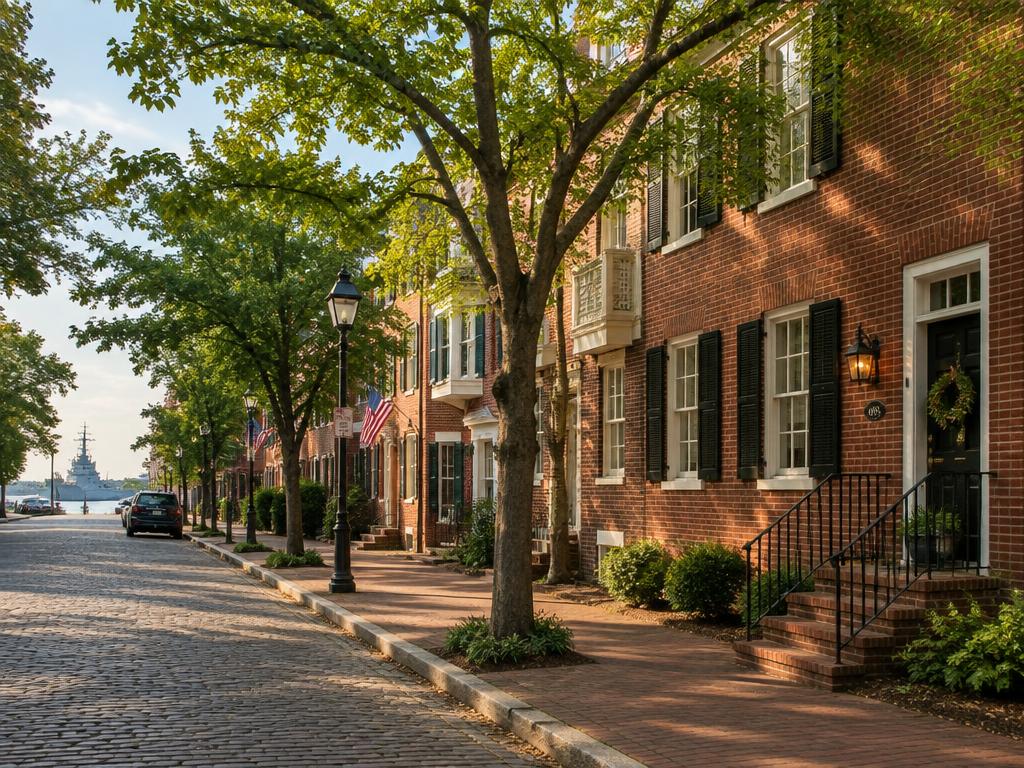
The historic core sits around Portsmouth Boulevard and Deep Creek Boulevard, with residential streets including Manly, Dahlia, Hobson, Dewey and Bagley Streets. Homes are closely spaced, generally one- and two-story frame and brick cottages and bungalows from the late 1910s and 1920s, with covered porches, gabled roofs and small, well-defined front yards that give the streets a consistent, walkable rhythm.
Because the original builders varied rooflines and setbacks deliberately, you'll notice the street rhythm changes block by block even though the houses are all roughly the same age. Some blocks have been beautifully maintained or thoughtfully renovated with updated systems behind historically appropriate exteriors, and others still have homes waiting for a buyer willing to do the work, so touring in person matters more here than relying on photos alone.
If you want turnkey and modern, Truxtun will ask you to compromise somewhere. If you want authentic early-20th-century character with genuine historical significance, it's one of the best values left in Portsmouth for that, and I can help you figure out realistically how much renovation you actually want to take on versus finding a home that's already been updated.
Lot sizes are generally modest and consistent with the neighborhood's original planned density, so buyers looking for sprawling yards should look elsewhere in the city; buyers who want a walkable block with neighbors close by will feel right at home.
Everyday Life and the Civic League
Truxtun has an active civic league and a real sense of neighborhood identity that shows up in cookouts, cleanup days and preservation events throughout the year. It's a walkable, grid-based neighborhood with sidewalks and shade trees, which makes it feel more like an old streetcar suburb than a typical postwar Portsmouth block built around cul-de-sacs and larger setbacks.
You're close to Portsmouth's other historic districts, local churches with long histories tied to the shipyard workforce, and everyday shopping along the surrounding commercial corridors. Buyers relocating from out of town often tell me Truxtun feels more like a small town within the city than anywhere else in Portsmouth, and that the neighbors here tend to know each other in a way that's increasingly rare.
If community involvement and a strong sense of place matter to you as much as the house itself, I'd put Truxtun near the top of your list to tour.
Commutes: The Shipyard, I-264 and Downtown Tunnels
Truxtun's location near the Norfolk Naval Shipyard was the entire reason the neighborhood exists, and that proximity still matters for today's shipyard employees, sailors and civilian contractors. I-264 and the surrounding arterials give you a workable path to Norfolk and Chesapeake without a long haul, and downtown Portsmouth with its tunnel connections to Norfolk is a short drive away.
That means Truxtun works well for anyone whose daily commute runs toward the shipyard, downtown Portsmouth offices, or across the water into Norfolk. It's one of the shorter commutes available in the city for shipyard workers specifically, which is worth factoring in if gas money and drive time matter to your monthly budget.
If you're relocating for work or reporting to a new duty station, I'd encourage you to drive the actual commute at the time you'd normally make it before writing an offer, since traffic patterns around the tunnels can shift dramatically by time of day. My relocating page and PCS/military page cover how I help buyers moving from outside Hampton Roads.
Parking is generally on-street or in small driveways rather than attached garages, which is worth factoring in if you have multiple vehicles.
Flood Zones and Insurance
Truxtun sits at a modest elevation compared to some low-lying Portsmouth neighborhoods closer to the Elizabeth River, but flood risk in this part of the city should never be assumed one way or the other. I pull the FEMA flood map for any specific address we're considering, and I ask sellers directly about drainage, standing water and prior claims before we even schedule a showing.
If a home falls in a mapped flood zone and you're financing it, your lender will require flood insurance, which changes your true monthly payment. Run the numbers in my mortgage calculator before you fall in love with a house so there are no surprises at closing.
During any inspection on an older home in this part of the city, I also want the inspector paying close attention to grading, gutters and crawl space moisture, since drainage standards have changed a lot since these homes were built.
Historic District Rules Instead of an HOA
Truxtun doesn't have a traditional homeowners association, but it is a locally recognized historic district, and exterior changes, from roofing to windows to additions, generally need to go through the city's Certificate of Appropriateness review process with design guidelines the city adopted specifically for this neighborhood. That's a very different set of rules than an HOA, and it's meant to protect the character that makes the neighborhood special rather than to police paint colors or parking.
If you're planning exterior renovations, I'll walk you through what typically needs approval before we go under contract, so you know what you're taking on and can budget both the time and the cost of working within historic guidelines.
Schools Serving Truxtun
Truxtun families are zoned into Portsmouth Public Schools, and I cover the specific elementary, middle and high schools that generally serve this area, along with how to confirm zoning for a specific address, in my Truxtun schools guide. I'd encourage any family with school-age kids to read that guide and confirm zoning directly with the division before writing an offer.
Utilities, Insurance and Everyday Costs of an Older Home
Because most Truxtun homes date to the late 1910s and 1920s, budget for the realities of century-old construction: plumbing and electrical systems that may need updating, roofs and mechanical systems that don't last as long as they would in new construction, and homeowners insurance premiums that can run higher than a comparably priced newer home elsewhere in the city. None of this is unique to Truxtun, but it's worth factoring into your monthly budget alongside principal, interest, taxes and insurance.
I always recommend a full home inspection with an inspector who's comfortable evaluating early-20th-century construction, and if the seller has records of past electrical, plumbing or roofing upgrades, I ask for them before you're deep into your due diligence period. A little extra homework up front saves a lot of stress after closing.
Financing an Older Home
Older homes can bring financing wrinkles, from appraisal conditions on aging roofs or electrical systems to insurance costs tied to age and construction type. VA loans work well here for eligible buyers given the shipyard and military connection; see my VA loans guide for how that program handles older homes and required repairs. FHA and conventional options are also common; I cover both in my FHA loans guide and conventional loans guide.
First-time buyers drawn to Truxtun's price point should also look at my first-time buyers page and home buyer checklist before you start touring, since getting your financing lined up early makes a real difference once you find the right house.
Because appraisals on older historic-district homes can occasionally come in conservatively, having a knowledgeable lender who's worked in Portsmouth's historic neighborhoods before is genuinely useful.
Comparing Truxtun to Other Portsmouth Historic Neighborhoods
If historic character is what's drawing you to Truxtun, it's worth also touring Olde Towne and Park View, two other Portsmouth neighborhoods with older housing stock and their own distinct architectural identities. Olde Towne tends toward larger, more formal historic homes near the waterfront, while Park View has its own mix of early-20th-century bungalows and cottages. Truxtun's combination of planned architectural variety, deep multigenerational community ties and comparatively approachable pricing is what tends to set it apart once buyers have toured all three.
I'm glad to put together a tour that covers more than one of these neighborhoods in a single day so you can compare the feel of each block side by side before deciding where to focus your search.
Writing a Competitive Offer
Well-priced, well-maintained homes in Truxtun can move quickly, especially among buyers who specifically want historic-district character. I'll pull recent comparable sales on the same block or an adjacent one, since condition and prior renovation work vary so much house to house here that citywide averages don't tell the real story.
I also make sure your offer accounts for any known historic-district review requirements if you're planning changes, so you're not surprised after closing. Let's talk about your must-haves and I'll help you build a strategy that fits this specific market, whether that means moving fast on a renovated home or being patient for the right project house to come along.