Why Buyers Keep Asking About Shea Terrace
Shea Terrace is one of those Portsmouth neighborhoods that people find almost by accident, usually because they toured one house on a quiet street wrapped by water and asked me why they'd never heard of it before. It sits close in to downtown Portsmouth, bordered on much of three sides by Scotts Creek, and it has the kind of mature trees, front porches and settled feel that newer subdivisions simply can't fake.
It's a smaller, tighter-knit neighborhood than some of the bigger names in Portsmouth, and that's part of the draw. Buyers who want walkable streets, a real sense of neighbors knowing neighbors, and a shorter drive to the Navy installations tend to gravitate here once they see it in person. Compared to nearby Park View or Prentis Park, Shea Terrace tends to feel a little more tucked away and residential, with water views on more of its streets.
This guide covers the neighborhood's history, its housing stock, the commute, flood considerations along the creek, HOA and civic league basics, schools and financing, plus how to put together a competitive offer here. For the bigger picture on the city, start with my Portsmouth overview.
I'll also say this up front: Shea Terrace rewards buyers who actually get out and walk the streets rather than just scrolling photos. The light off the creek, the porch culture, and the way certain blocks back right up to the water are things you feel on foot, not on a listing page.
Even buyers who grew up in Hampton Roads are sometimes surprised to learn how close Shea Terrace sits to downtown Portsmouth while still feeling like its own quiet world, separated from busier corridors by the creek that wraps around it.
A Neighborhood Built Around Scotts Creek
Long before it was Shea Terrace, this land was known as Church Point and later Scottsville, going back to a land grant to the Scott family in the early 1700s. The waterway that wraps around the neighborhood was originally called Scott's Creek, and it's still the defining feature of the area today. [1](https://sheaterrace.com/?page_id=4)
The neighborhood's current name comes from John J. Shea, an Irish-American who married into the Scott family in the mid-1800s and began buying back land in the area, eventually giving the community its name. [2](https://www.pilotonline.com/2009/12/28/whats-in-a-name-shea-terrace-portsmouth/)
During World War II, Portsmouth's population swelled with shipyard and military workers, and many single-family homes in Shea Terrace were converted into two-family units to help house the influx, a detail that still shows up in some of the neighborhood's older properties today. [1](https://sheaterrace.com/?page_id=4)
Knowing this history helps explain the bones of the neighborhood: a close-knit, walkable layout built up gradually over decades around a tidal creek, rather than platted all at once by a single developer.
That layered history, from Church Point to Scottsville to Shea Terrace, is part of why the neighborhood feels so different from planned postwar subdivisions elsewhere in the city. Streets grew organically around the water rather than around a developer's site plan, which is part of the charm but also means lot shapes, setbacks and orientations vary more than you'd expect for such a small area.
Housing Stock: Cape Cods, Bungalows and Postwar Cottages
Shea Terrace's homes span a real range of eras, from homes built in the 1800s near the historic core to the Cape Cods and brick ranches that filled in around the neighborhood at midcentury and just after World War II. You'll see everything from small one-story cottages to larger two-story homes with detached garages and deep backyards.
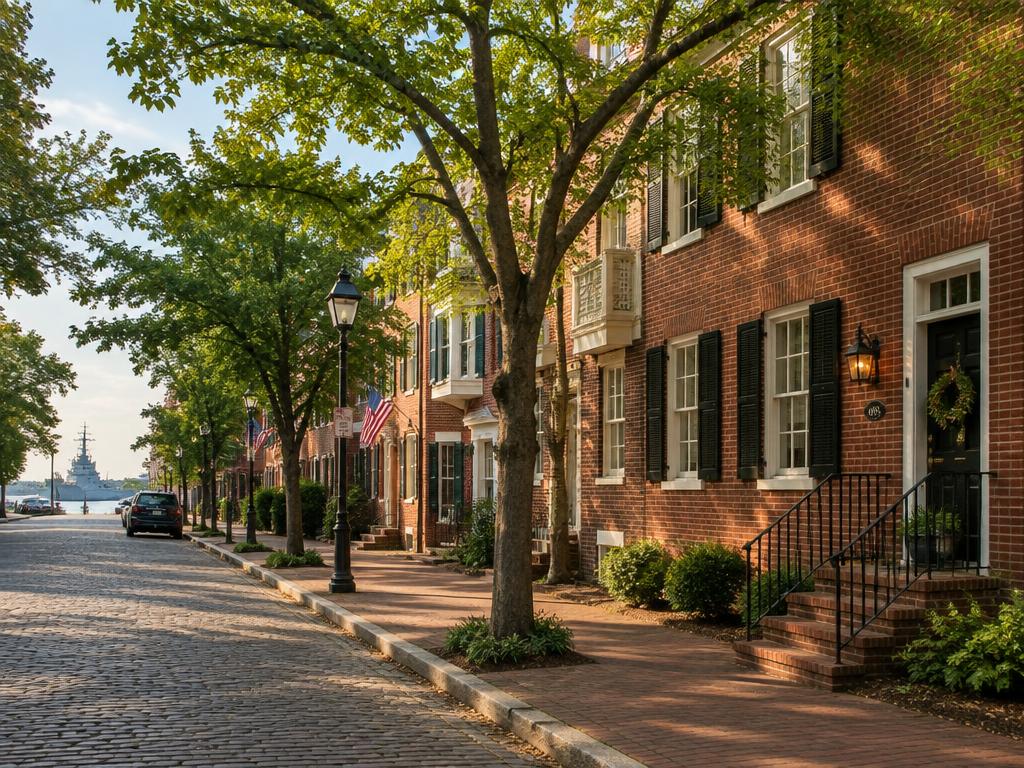
Because the neighborhood grew over such a long span, no two blocks look quite alike. Some streets have a strong Cape Cod and bungalow character with covered front porches, while others lean into simple brick ranch homes typical of 1940s-50s Portsmouth. Lot sizes vary too, with some of the best lots backing directly onto Scotts Creek.
If you love an older home with genuine character, updated kitchens layered onto original hardwood floors and trim, this is a good place to look. If you want a completely turnkey home with zero older-home quirks, budget time to find the right one, since move-in-ready inventory here doesn't sit on the market long.
Detached garages are common here, a holdover from an era when families needed storage and workshop space more than a third bathroom, and many buyers appreciate the extra flexibility that gives for a home office, workshop or simple storage.
Because financing rules and appraisal guidelines can be stricter on very old or heavily converted homes, especially any property still configured as a legal two-family unit from the WWII era, I always recommend getting pre-approved with a lender who has experience with older Portsmouth housing stock before you fall in love with a specific listing.
Holladay Street, Constitution Avenue and the Old Neighborhood Core
The blocks around Holladay Street and Constitution Avenue sit at the historic heart of Shea Terrace, near where the neighborhood's namesake elementary school once stood. That school building, designed in 1925 by noted Virginia architect Charles M. Robinson, closed in 2000 and was later converted into senior housing, but it remains a neighborhood landmark and a reminder of how long people have called this area home. [3](https://en.wikipedia.org/wiki/Shea_Terrace_Elementary_School)
Homes in this core tend to be some of the neighborhood's oldest, with genuine early-20th-century detail. A family grocery store once operated on Holladay Street, and longtime residents still talk about the neighborhood's tight, self-contained feel going back generations. [1](https://sheaterrace.com/?page_id=4)
Streets closer to the creek edges, including several dead-end and cul-de-sac style blocks, tend to draw buyers specifically looking for water views or a quieter, more private setting within the neighborhood.
Walking this pocket of the neighborhood on a weekend, you'll notice how many homes still have their original porch columns, transom windows or decorative brickwork, details that are expensive to replicate in new construction and part of why buyers who value character keep coming back to this specific stretch of streets.
Life on the Water: Scotts Creek Park and the Waterfront
Scotts Creek itself is the neighborhood's biggest amenity. It wraps around Shea Terrace on much of three sides, hosts a healthy population of egrets, herons and other wildlife, and gives a meaningful share of homes here direct or near-direct water views that you simply won't find in most other central Portsmouth neighborhoods.
Scotts Creek Park gives residents a shared green space right along the water, an easy walk from many of the surrounding blocks. For buyers who want a waterfront feel without a waterfront price tag, Shea Terrace is one of the more attainable options in this part of Hampton Roads.
If a water view or direct water access is a must-have, tell me early. Those specific lots don't come up often, and they tend to move fast once they do.
Even away from the water's edge, the creek shapes daily life here, cooler breezes in summer, better birdwatching than you'd expect in a city neighborhood, and a shared sense among residents that this stretch of Portsmouth is a little bit of a hidden gem.
Commutes: Downtown Portsmouth, the Shipyard and the Tunnels
Shea Terrace's location near the entrance to Martin Luther King Freeway puts it within easy reach of downtown Portsmouth, Olde Towne, and the region's tunnel system connecting to Norfolk. Norfolk Naval Shipyard and Portsmouth Naval Medical Center are both a short drive away, which is a major reason military and shipyard families ask about this neighborhood specifically.
For anyone commuting into Norfolk, the Downtown or Midtown Tunnels are the usual route, and the Elizabeth River Ferry from nearby Olde Towne is a pleasant alternative if you work near the Norfolk waterfront and want to skip tunnel traffic altogether.
If you're relocating for a base assignment or a new job, I always recommend driving your actual commute at the time of day you'll be making it before writing an offer. My relocating page and PCS/military page walk through how I support buyers moving from out of town or coming off orders.
Traffic patterns around the tunnels can shift significantly depending on the time of day and any incidents on I-264 or I-664, so if you're commuting daily to Norfolk or Virginia Beach, it's worth testing the drive more than once before you commit to a specific home.
For buyers who work primarily in Portsmouth itself, whether at the Naval Medical Center, the shipyard, or downtown offices, Shea Terrace offers one of the shortest possible commutes in the city, often under ten minutes.
Flood Zones and Insurance Along Scotts Creek
Because Shea Terrace is nearly surrounded by tidal water, flood risk is something every buyer here needs to check for the specific address, not assume based on the neighborhood's reputation. Streets closest to the creek are more likely to fall within a mapped FEMA flood zone than blocks set back on higher ground a few streets over.
I pull the FEMA flood map for any home we're considering and ask sellers directly about past water intrusion, drainage problems, or flood insurance claims. If a lender requires flood insurance because of the zone, that's a real monthly cost, so run the numbers early using my mortgage calculator so there are no surprises at closing.
During inspection, I want extra attention paid to crawl spaces, grading, gutters and foundation drainage, especially on the homes closest to the water. It's not a reason to avoid the neighborhood, just something to budget and plan around.
It's also worth asking whether a home has ever been elevated or had flood mitigation work done, since that can affect both insurance costs and resale value down the line. A knowledgeable local lender can help you understand exactly how a flood zone designation will affect your monthly payment before you write an offer.
HOA, Civic League and Everyday Life
Shea Terrace doesn't operate like a mandatory-fee HOA neighborhood; instead it has an active civic league that keeps residents connected on everything from mosquito spraying schedules to bulk trash pickup changes and community meetings. It's worth asking your agent or the seller whether a given property has any specific deed restrictions, since older Portsmouth neighborhoods can vary block to block.
Day to day, residents are close to the Downtown Portsmouth Farmers Market, Olde Towne's restaurants and shops, the Children's Museum of Virginia, and the Portsmouth Naval Shipyard Museum, all just minutes away. That combination of small-town neighborhood feel with real urban amenities close by is a big part of the appeal.
It's a quiet, tucked-away pocket of the city, which residents genuinely like, but it also means you should expect a smaller, more selective pool of listings at any given time compared to larger Portsmouth neighborhoods.
The civic league also plays an active role in things like street sweeping schedules, mosquito control coordination with the city, and organizing town hall meetings where residents can raise concerns directly with city representatives, a level of community involvement you don't always find in newer, more anonymous subdivisions.
Schools Serving Shea Terrace
Portsmouth Public Schools assigns students by home address, and the historic Shea Terrace Elementary building itself closed years ago and is no longer a functioning school, so it's essential to verify current zoning before you buy rather than assume based on the neighborhood's name.
I've put together a full breakdown of the schools that typically serve this part of central Portsmouth, along with how to confirm your specific zoning, in my Shea Terrace schools guide.
Financing Your Purchase
Shea Terrace's home prices and older-home character make it a realistic option for a range of buyers, from first-time buyers to military families using a VA loan. If you're eligible for VA financing, my VA loans in Hampton Roads guide walks through how that works locally, including how appraisals handle older homes.
First-time buyers should also look at my FHA loans guide, and anyone putting more down or buying with a stronger credit profile may want to compare options in my conventional loans explained post. My home buyer checklist is a good next step once you're ready to start touring.
Writing a Competitive Offer Here
Because Shea Terrace has a limited number of homes and a loyal base of buyers who specifically seek it out, well-priced, well-maintained listings, especially anything with a water view, tend to move quickly. I watch this neighborhood closely so we're ready to move the moment the right listing hits.
On older homes, I build inspection contingencies around the issues most common to this era of construction, like aging wiring, roofs and foundations, so we can negotiate repairs or credits without losing the deal over normal older-home findings.
If you're weighing Shea Terrace against nearby options, my guides to Park View and Sterling Point are good points of comparison for character, price point and water access. Whenever you're ready, reach out and I'll walk you through what's currently available.
I also encourage buyers to be ready to move quickly once we find the right home, since well-priced listings here, especially anything with water frontage or a recent renovation, can go under contract within the first week or two on market.